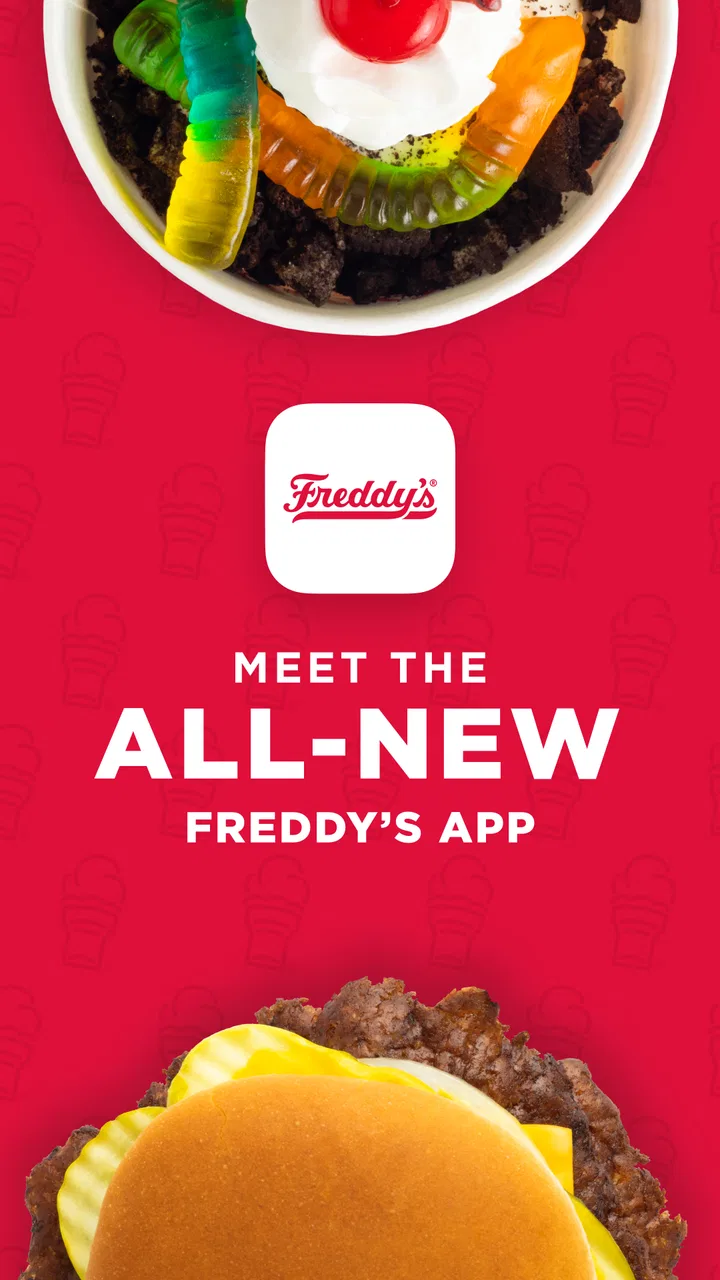
Freddy’s
- 4.7
- Rating
- 1.00M
- Installs
- Free
- Price

 Analysis by App-foxy
I usually judge a restaurant app by what happens after the first order. A polished menu is nice, but the real test is whether the app still saves time when I am hungry, busy, or ordering the same meal again weeks later. Freddy’s is built around that practical idea: it lets me place an order for carry-out, delivery, or dine-in while earning points on each order. After spending time with it, I see it as a useful companion for regular Freddy’s customers rather than an essential food app for everyone.
That distinction matters. This is a free Food & Drink app from Freddy's LLC, and it is aimed at people who already know they like Freddy’s food or who have a nearby restaurant they visit often. The first use is straightforward and appealing, but the lasting value depends on how naturally it fits into your routine. If I only visited occasionally, I would not keep another restaurant app installed without a clear reason. If Freddy’s was one of my dependable choices, the ordering convenience and points system would give it a stronger case.
What it feels like to use Freddy’s beyond the first order
I find the lasting value of Freddy’s depends less on placing an order once than on whether its routine stays comfortable across different days and needs. In this section, I look at how its focused ordering approach may help with planning and review, while keeping in mind that the best option can change with a person’s abilities, surroundings, and appetite for phone-based ordering.
You May Also Like

 Blood Strike: 2.5 Anniversary
Blood Strike’s Loadouts Turn Every Drop Into a Tactical Gamble
A close look at Blood Strike’s custom loadouts: how fast access to signature weapons reshapes its battle royale rhythm, rewards preparation, and narrows the gap between fights.

 Pandora - Music & Podcasts
Pandora’s Music Is Easy to Start, but Harder to Recover
Pandora’s strength is its low-effort path from a seed to a station. Its weak spot is how much confidence it asks you to place in connection, setup, and quiet recovery.

 8 Ball Pool
 Is Built on Rivalries, Rematches, and Routine
A close look at the rivalries, rematches, shared routines, and unanswered safety questions that turn a quick pool match into a persistent mobile community.

 Samsung Music
’s Quiet Strength Is Playing What You Already Own
Its reach comes less from spectacle than from dependable access to a personal library. That simplicity is both the app’s strongest retention engine and its ceiling.

 AccuWeather: Weather Radar
AccuWeather Review: A Quick, Clear Forecast for Everyday Decisions
For everyday plans, the best forecast is the one you can understand quickly. AccuWeather makes rain timing, radar, and local conditions easy to act on, with a few trade-offs.

 Hill Climb Racing
Why Hill Climb Racing Still Turns Crashes Into One More Run
A tiny car, a bumpy hill and one more upgrade: Hill Climb Racing keeps resurfacing because its simple chaos makes every near-miss feel personal.
More From Our News Desk



The first-week appeal is mostly about removing small obstacles
My first impression is that Freddy’s does not need to be complicated to be useful. The central purpose is easy to understand: choose food, decide how you want to receive it, and complete the order. That direct focus is a strength because I am not opening a restaurant app to explore a complicated social platform or spend time learning a new system. I want to get from appetite to order with as little friction as possible.
The three ordering situations make the app more flexible than a basic carry-out tool. Carry-out is the obvious use case when I am passing a location and want food ready when I arrive. Delivery is more convenient when I am staying home. Dine-in ordering can be helpful when I am already at the restaurant and would rather browse and order from my phone than wait at the counter. Having those choices in one place makes the app feel relevant to different parts of a normal week.
A realistic example is a busy evening when I am leaving work and do not want to decide what to cook. I can open the app before driving, choose carry-out, and use the waiting time to check the order rather than making the entire decision at the restaurant. On another day, I might use delivery because convenience matters more than the trip. The app earns its place when it handles these small decisions cleanly instead of making me repeat them through a less focused third-party service.
The points system also gives the first week a sense of progress. Every order contributes points, so the app is not only a digital menu. That said, I would not treat points as an immediate discount or assume that the first few orders will transform the value of a meal. Rewards are most persuasive when I already intend to eat at Freddy’s. They should influence where I place a planned order, not encourage me to buy food I would otherwise skip.
One useful habit is to decide the ordering method before building the meal. Carry-out, delivery, and dine-in are not interchangeable experiences: they affect timing, convenience, and sometimes how carefully I review the order before submitting it. Selecting that context first helps me avoid preparing an order for the wrong situation. It is a small workflow improvement, but it makes the app feel less hurried.
Who will appreciate it quickly, and who probably will not
Freddy’s is a good fit for regular customers, households that place shared orders, and people who appreciate having a restaurant’s ordering process in one dedicated app. It is especially practical when I already know my usual meal and want to repeat it without starting from scratch mentally. The points feature adds a reason to use the official app instead of ordering through a general delivery marketplace whenever the available option suits my plans.
It is less compelling for someone who rarely eats at Freddy’s, lives far from a participating location, or prefers comparing several restaurants in one screen. A broad delivery app may be better for that person because it combines discovery, restaurant comparison, and delivery management. Freddy’s is more focused, and focus is helpful only when the restaurant itself is already part of your routine.
I would also avoid installing it solely because restaurant apps are fashionable. The value comes from repeated use, not from having another icon on the phone. If I expect one visit every few months, using a browser or another ordering route may be simpler. The dedicated app becomes worthwhile when the points and ordering options match behavior I already have.
How it compares with the usual alternatives
Compared with ordering at the counter, the app gives me more time to review the meal before committing. That can be useful for a group order, when several people are calling out choices, or when I want to avoid holding up a line. The trade-off is that phone ordering adds another step: I need to open the app, check the selected location and method, and make sure the final order reflects what I actually want.
Compared with a general delivery marketplace, Freddy’s has a narrower purpose but a more direct relationship with the restaurant’s own ordering experience. The points system is the important difference for a frequent customer. A marketplace may be better when I am comparing delivery choices across restaurants, while the Freddy’s app makes more sense when I have already decided where to eat and want the restaurant-specific benefit.
Compared with calling the restaurant, the app is easier for reviewing an order visually and less dependent on explaining every item aloud. Calling can still be preferable when an order is unusual or I need to ask a question before paying. I would not expect a focused ordering app to replace a conversation in every exceptional situation. Its strength is routine ordering, not handling every special request imaginable.
The month-to-month value depends on a repeatable routine
After the novelty fades, the app needs to answer a simple question: does it make my recurring Freddy’s visits easier? In my experience, the answer is yes when I use it as a planning tool rather than merely a digital menu. I can decide on carry-out before leaving, choose delivery when convenience is the priority, or use dine-in ordering when I am already at the restaurant. Those repeated situations are where the app has a chance to become a habit.
The points system is the clearest long-term reason to return. Earning points on every order makes the official app more attractive than an ordering method that provides no restaurant-specific progress. Still, the reward value should be judged over the way I actually eat, not in isolation. If I order Freddy’s regularly, points can feel like a sensible return on behavior I already planned. If I am ordering only to chase points, the habit can become expensive rather than rewarding.
For families or groups, the app can also reduce the mental load of coordinating a meal. I can review the full order before submitting it instead of trying to remember several requests during a phone call. The important tip is to pause at the review stage and check the selected service method, location, and items together. A convenient interface does not remove the need for that final check, especially when delivery and carry-out are both available.
Another worthwhile habit is to use the app when I have enough time to think, not only when I am already impatient. Building an order while distracted makes any food app feel unreliable, even when the problem is simply a rushed selection. I get more value when I treat it as a short planning step: choose the location, select the service type, review the meal, then submit. That process reduces avoidable mistakes and makes the app feel calmer.
Its long-term value is therefore conditional rather than universal. The app does not need to be opened every day to justify itself. It needs to be dependable during the occasions when Freddy’s is already the answer. That is a healthier standard for a restaurant app than expecting constant engagement. I would keep it for recurring visits, but I would not recommend it as a general-purpose food discovery tool.
Maintenance is light, but attention still matters
The app is free and carries an Everyone age rating, which makes it approachable for a broad range of users. Its current version is 26.3.4, and it supports devices running Android 8.0 or later. That compatibility is useful for people who keep an older phone, although anyone with an especially old device should still pay attention to whether the app remains comfortable to use on that hardware.
Maintenance is mostly behavioral rather than technical. I would keep the app updated through the normal app-store process, but the bigger responsibility is checking the order details each time. Restaurant menus, availability, service options, and timing can change by location or circumstance. Even a well-designed app cannot make a selected location correct if I never look at it.
Location checking is one of the most important habits. Before paying, I would confirm that the chosen Freddy’s restaurant is the one I intend to use, particularly when I am ordering from home or traveling. This is more important for carry-out than many people expect: a quick order can become inconvenient if I arrive at the wrong restaurant. For delivery, I would similarly review the destination and service method before finalizing.
I also prefer to keep notifications purposeful. If the app offers order-related alerts, those can be useful during a delivery or carry-out window, but I do not need every reminder to become part of my daily phone noise. The best restaurant app is one I can find when I need it without feeling that it is competing for attention all week. That balance helps it survive beyond the first few enthusiastic uses.
Account maintenance is another quiet part of the experience. If I change phones, addresses, or ordering habits, I would take a moment to make sure the account still reflects my current situation. I would not rely on memory for saved details. A short review before placing an order is less frustrating than discovering an outdated choice after submission.
Where fatigue can set in
The biggest source of fatigue is repetition. If I already know my usual Freddy’s order, opening an app can eventually feel like an extra step compared with walking in and ordering directly. Points help offset that feeling, but they do not erase it. The app has to save enough time or provide enough ongoing value to justify the additional digital routine.
Another limitation is its narrow restaurant focus. I cannot use it to compare Freddy’s with other nearby meals in the same way I can with a broad delivery service. That is not a flaw in the app’s purpose, but it affects whether it deserves permanent space on my phone. People who make food decisions based on variety may find a general marketplace more useful, while dedicated Freddy’s customers will likely appreciate the focus.
Delivery can also change the value calculation. Convenience is attractive, but I would compare the total experience with carry-out rather than assuming delivery is always the better choice. If I am already near a restaurant, carry-out may be the more efficient routine. If I am home, delivery may save a trip. The app is useful because it lets me choose, but it cannot make every option equally sensible for every occasion.
Points can create a different kind of fatigue if I start monitoring them too closely. I like earning progress on an order I already wanted, but I would not let the reward system dictate every meal. The strongest use of the feature is passive accumulation through normal visits. The weakest use is changing my spending simply to reach a future benefit.
There is also a practical trade-off between convenience and control. Ordering in advance can make a visit smoother, but it means I have committed before seeing the restaurant in person. If my plans are uncertain, ordering at the counter may be safer. I use the app when timing and location are reasonably clear, and I choose the traditional route when flexibility matters more than speed.
What the numbers suggest about staying power
Freddy’s has an average rating of 4.7 from around thirty thousand ratings, with roughly four thousand four hundred written reviews. It has passed one million installs, which tells me the app has reached well beyond a tiny group of occasional testers. Those figures do not guarantee that every order will be smooth, but they support the idea that the app is established enough to be taken seriously by regular customers.
The scale also changes how I interpret the app’s role. This is not a novelty utility that exists only for a short promotion. It has a large enough user base to function as a continuing part of Freddy’s digital ordering experience. Still, popularity does not make it automatically useful for me. My own visit frequency remains the deciding factor, especially because a dedicated restaurant app has less value when the restaurant is not part of my normal routine.
The developer, Freddy's LLC, keeps the product closely tied to the Freddy’s brand rather than trying to turn it into a broad food platform. I see that as both a strength and a boundary. The focused design can make routine orders clearer, but it also means I should not expect the breadth of a service built around many restaurants.
My long-term verdict
After the first-week appeal wears off, Freddy’s earns lasting space on my phone only when I visit the restaurant with some regularity. For that audience, the combination of carry-out, delivery, dine-in ordering, and points gives the app recurring value. It can turn a familiar meal into a more organized routine and reduce the friction of ordering for myself or a group.
I would recommend it to a Freddy’s regular who wants a direct way to place orders and collect points without depending entirely on a general delivery marketplace. I would also recommend it to someone who often decides on meals before leaving home and values reviewing the order privately. The app is free, broadly accessible, and focused enough that the learning curve should not be a serious concern.
I would skip it if I rarely eat at Freddy’s, prefer browsing many restaurants at once, or dislike maintaining separate restaurant apps. In those cases, the points will accumulate too slowly to matter and the dedicated interface may feel like unnecessary clutter. Calling or ordering in person can still be the better choice for unusual requests, uncertain plans, or occasions when I want a conversation before committing.
My final view is positive but measured: Freddy’s is most valuable as a quiet repeat-use tool, not as an app that demands attention. It does not need to replace every way of ordering food. It simply needs to make Freddy’s visits easier often enough that opening it feels natural. For a regular customer, that is a reasonable and lasting role; for everyone else, the usual alternatives may be more practical.
If I were recommending Freddy’s to a friend, I would say this: install it when Freddy’s is already one of your dependable food choices, use the points as a bonus rather than a reason to overspend, and make location and service checks part of your final review. Used that way, it has genuine everyday value without pretending to be more than a focused restaurant app.
FAQs for Freddy’s
01What is Freddy’s app about?
Freddy’s is an immersive mobile game that combines elements of strategy, horror, and adventure. Players navigate through various levels, solving puzzles and avoiding obstacles to progress. The game is set in a mysterious environment with eerie graphics and suspenseful soundtracks, providing a thrilling experience for fans of the genre.
02Is Freddy’s app suitable for all age groups?
Freddy’s is designed for a mature audience due to its horror and suspense themes. It contains elements that might be intense or frightening for younger players. The app is generally rated for teens and above, so parents should use discretion when allowing children to download and play the game.
03What are the system requirements for Freddy’s?
To run Freddy’s smoothly, Android users need a device with at least Android 5.0, while iOS users require iOS 11.0 or later. The game is optimized for both smartphones and tablets, but it’s essential to have sufficient storage space and a stable internet connection for the best gameplay experience.
04Does Freddy’s app offer in-app purchases?
Yes, Freddy’s includes in-app purchases. Players can buy various items and upgrades to enhance their gameplay experience. While the game is free to download, these optional purchases can provide additional content and features, so users should be mindful of spending if they wish to enjoy the app fully without incurring extra costs.
05How can players ensure a smooth gaming experience with Freddy’s?
To ensure a smooth gaming experience with Freddy’s, players should regularly update the app to the latest version, ensuring all bugs are fixed and new features are available. It's also advised to close background apps to free up device resources and maintain a stable internet connection to prevent any interruptions during gameplay.
Pros
- Engaging gameplay with challenging levels.
- High-quality graphics and sound effects.
- Regular updates with new content.
- Intuitive controls for easy navigation.
- Immersive storyline enhances user experience.
Cons
- In-app purchases can be costly.
- Occasional bugs affect performance.
- Requires a stable internet connection.
- Limited free content available initially.
- Ads can be intrusive during gameplay.

Freddy’s
Gallery